
In This Article
The Biggest Beer News Nepal Has Witnessed in Years
If you’ve ever cracked open a cold Gorkha Beer on a sweltering Kathmandu afternoon, then this isn’t just news, it hits a little closer to home.
In April 2026, Carlsberg Group, the global brewing powerhouse behind Gorkha Beer, announced an additional Rs 10 billion investment in Nepal. Their top global leadership flew in personally to make it official: CEO Jacob Aarup-Andersen, Chairman Henrik Poulsen, and Executive Vice President Nikolaos Kalaitzidakis all touched down in Kathmandu with a clear expansion mandate.
For most people, FDI announcements live in the business pages and go unread. But this one is different , and if you drink beer in Nepal, here’s exactly why you should care.
A Quick Backgrounder: Carlsberg and Gorkha
Gorkha Brewery has been a Carlsberg subsidiary since 1988, nearly four decades of partnership that turned a local Nepali brew into the country’s dominant beer brand. What’s remarkable is that Carlsberg has always run Gorkha with an entirely local management team: Managing Director Arun Adhikari leads operations spanning finance, sales, marketing, and business development, all Nepali professionals managing a multinational at the highest level.
That track record of operational excellence is precisely what convinced Carlsberg’s global leadership to double down. When a company’s subsidiary consistently performs, the parent doesn’t walk away , it invests more.
Why Carlsberg Is Betting Big on Nepal Right Now
1. A Government That’s Sending the Right Signals
The investment announcement followed a direct engagement between Carlsberg leadership and Finance Minister Swarnim Wagle, who publicly assured investors of policy stability, improved governance, and a business-friendly regulatory environment. The Balen-led government has made investor confidence a visible priority, a notable shift in Nepal’s political-economic dynamic.
For global corporations, predictability matters more than almost any other variable. A government that communicates clearly and reforms consistently is one worth committing capital to.
2. Nepal’s Demographics Are a Goldmine for Beverages
CEO Jacob Aarup-Andersen was direct about the numbers: Nepal’s nearly 30 million population, with a large proportion aged 15–35, makes it a textbook growth market for consumer beverages. Young, increasingly urban, and with rising disposable incomes, Nepal’s demographic profile is exactly what beverage multinationals target.
This is the same logic that keeps PepsiCo, Coca-Cola, Unilever, and Dabur investing in Nepal. The consumer base is real, it’s growing, and it’s thirsty.
3. The Jawalakhel Group Partnership Deepens Local Roots
A significant development alongside the FDI announcement: Jawalakhel Group of Industries, one of Nepal’s most respected industrial conglomerates, acquired a 15% stake in Gorkha Brewery. This local equity partnership adds another layer of credibility and stability to Gorkha’s operations in Nepal.
When global capital partners with established local expertise, the result is typically faster growth, smoother supply chains, and deeper distribution reach, all of which matter enormously if you’re ordering beer in Kathmandu.
What This Investment Actually Means on the Ground
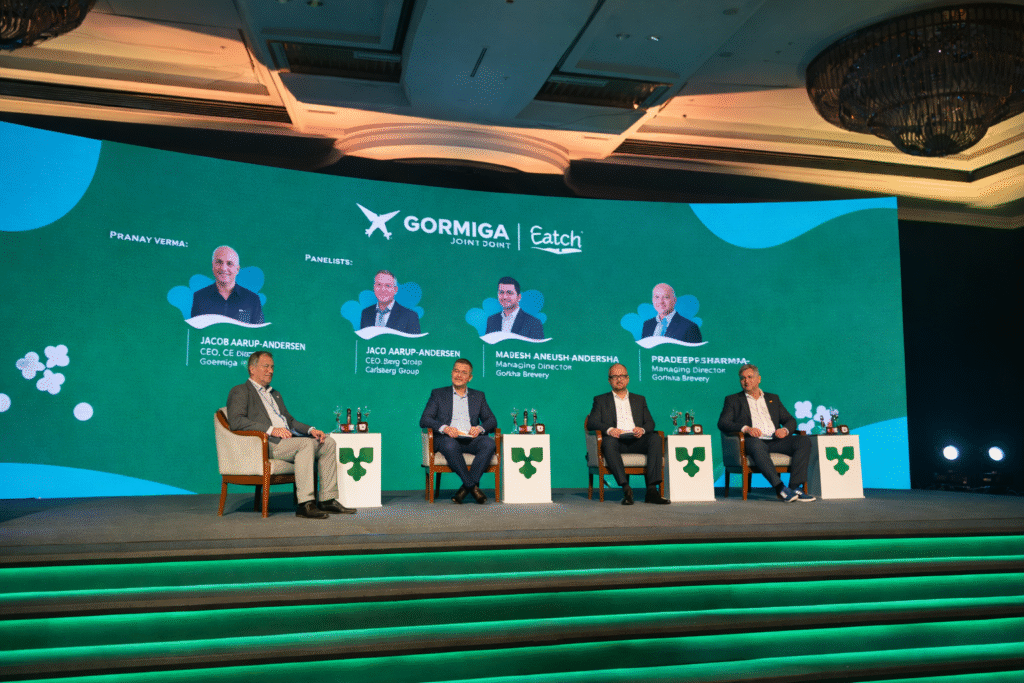
Carlsberg leadership engages in a strategic panel discussion in Kathmandu, marking a major milestone in Nepal’s Rs 10 billion FDI inflow and growing investor confidence.
Let’s bring this out of the boardroom and into the real world.
More Production = More Consistent Availability
Rs 10 billion is serious capital. A significant portion is directed at expanding Gorkha Brewery’s production capacity. For consumers and retailers, this means the chronic availability gaps that sometimes affect popular SKUs should ease considerably. More production capacity means a more reliable supply chain from brewery to distributor to your doorstep.
Quality Investment = Raised Standards
When a global brand commits this level of capital, quality assurance comes with it. Carlsberg’s international standards, applied locally, mean that Gorkha beer benefits from the same brewing consistency expected of a world-class product. This investment reinforces that commitment.
The Gorkha Brand Goes Regional
EVP Nikolaos Kalaitzidakis specifically praised the strength of the Gorkha brand and its regional scalability potential. This isn’t just about selling more beer in Kathmandu — Carlsberg sees Gorkha as a brand with export ambitions. A stronger domestic operation is the foundation for that regional push, and a stronger domestic operation benefits every Nepali consumer first.
Jobs and Economic Ripples Across the Value Chain
The investment creates a multiplier effect well beyond the brewery gates. Local agriculture (barley, malt sourcing), logistics, distribution, retail, and hospitality all feel the downstream benefit of a brewery operating at higher capacity. More beer produced means more people employed across the entire value chain.
What This Means for Nepal’s Broader Beverage Market
For years, Nepal’s beer market has been dominated by a handful of players with limited product diversity. Carlsberg’s expanded commitment is likely to do two things simultaneously:
Push local competitors to raise their game. When the market leader invests heavily in quality and capacity, the rest of the market follows or falls behind. Consumers win either way.
Open the door for premium imports. As Nepal’s investment climate improves and trade channels mature, the range of internationally available Carlsberg brands could expand in the Nepali market. Brands from Carlsberg’s global portfolio, already sold across South and Southeast Asia – become more commercially viable here as infrastructure improves.
The Bigger Picture: Nepal Is Changing
This investment doesn’t exist in a vacuum. It’s part of a visible trend: multinationals are reassessing Nepal upward.
Carlsberg’s announcement follows years of cautious optimism being tested by political instability and regulatory unpredictability. The new government’s early moves, emphasizing transparency, governance reform, and direct investor engagement – appear to be producing results that analysts are calling a genuine turning point.
If this momentum holds, Nepal could see a meaningful structural economic shift: from a remittance-reliant economy toward one where domestic production, export potential, and investor confidence drive growth. For everyday Nepalis, that’s not abstract, it translates to jobs, better products, stronger infrastructure, and a more stable economy.
What This Means for Alcohol Delivery in Kathmandu
For anyone who regularly orders liquor or beer through an alcohol delivery site in Kathmandu, a production expansion of this scale at Gorkha Brewery has real, everyday implications, even if they play out quietly behind the scenes.
Supply chain reliability improves. One of the persistent challenges for any trusted online liquor delivery site is stock inconsistency — popular Nepali beer SKUs going out of availability mid-week, or price fluctuations caused by distributor-level shortages. A brewery operating at expanded capacity means a more stable supply pipeline, from production floor all the way to last-mile delivery. For customers who want to get alcohol at their doorstep without the frustration of “out of stock” notices, this is genuinely good news.
Gorkha has long been considered the best beer in Nepal by a wide margin, and Carlsberg’s renewed investment reinforces the quality standards behind that reputation. When production scales under international brewing oversight, what reaches your door is a more consistent batch-to-batch. Whether you’re ordering a single six-pack or stocking up for the weekend, the beer you receive should reflect the same standard every time.
Alcohol at affordable prices becomes more sustainable. Shortage-driven price spikes are a real phenomenon in Kathmandu’s retail liquor market. When supply is unreliable, distributors and retailers adjust margins upward to compensate. A brewery running at higher, steadier output helps stabilize wholesale pricing, which, in a competitive delivery market, is more likely to pass through to the customer as alcohol at affordable prices.
A wider range of liquor becomes viable. As Carlsberg’s presence in Nepal deepens, the commercial case for introducing more of its international portfolio into the local market grows. For customers in Kathmandu, that could eventually mean access to Tuborg variants, premium lager labels, and other international beer options, ordered through a online delivery site without stepping outside.
In short, what happens inside a brewery in Chobhar has a quiet but direct effect on what gets delivered to your door in Thamel, Lazimpat, or Patan and how fast, how reliably, and at what price it arrives. For Kathmandu’s growing community of consumers who prefer the convenience of ordering liquor online, a stronger Gorkha Brewery is a win that shows up in the everyday experience of the delivery itself.
Author: Anisha Bhandari
Updated on: 20th April