
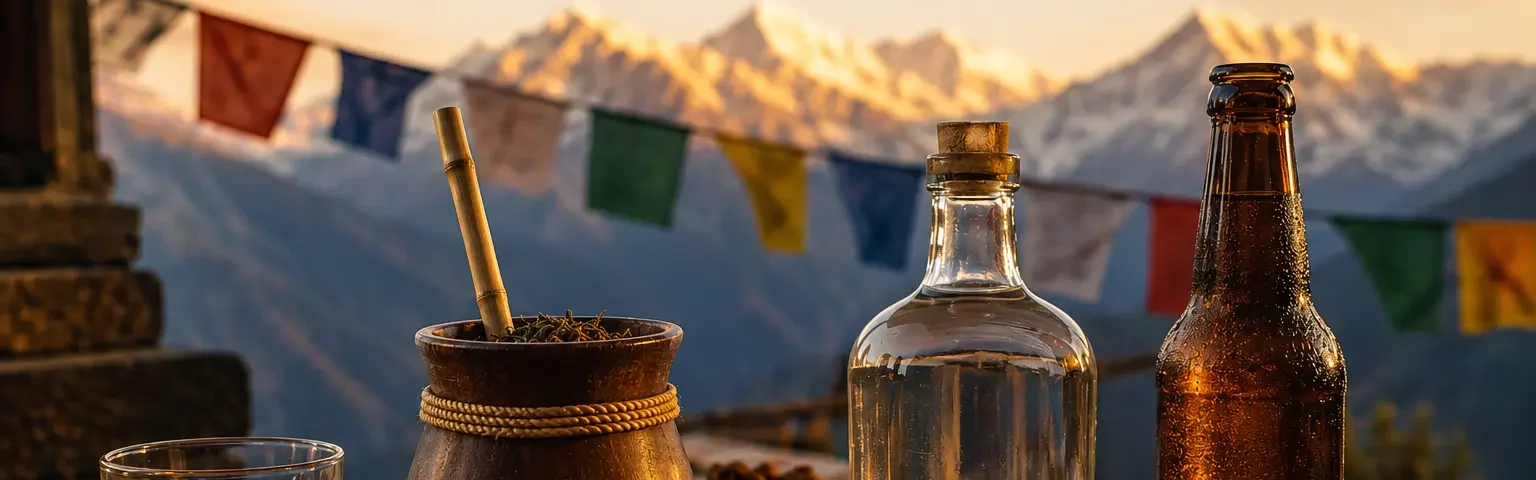
If you’re an Indian traveler heading to Nepal, whether it’s a trek through the Annapurna region, a weekend in Kathmandu, or a longer trip exploring Pokhara and beyond, chances are you’ve typed some version of “liquor price in Nepal” or “famous liquor brands in Nepal” into Google before you even booked your tickets. Fair enough. It’s one of those practical questions that doesn’t get talked about much in travel blogs, but matters a lot once you’re actually there.
Nepal’s drinking culture is a curious mix of the familiar and the completely unfamiliar. On one hand, you’ll spot Indian whiskey brands you’ve grown up with sitting right there on the shelf, priced differently than back home, and easy to order without a second thought. On the other hand, you’ll run into an entire world of local spirits: hot fermented millet drinks, homemade distilled liquor, fruit brandies from the mountains, that you won’t find anywhere in India.
This guide walks through exactly what’s popular in Nepal right now: the Indian brands that made the crossing, the homegrown Nepali spirits worth trying at least once, and the imported names lining bar shelves in Thamel. Whether you’re comparing prices, planning what to pack for, or just curious what locals actually order on a Friday night, here’s the full picture.
Is Alcohol Legal in Nepal?
Yes. Alcohol is legal and widely available across most of Nepal, sold in liquor stores, supermarkets, hotels, and bars, and increasingly through online delivery services in cities like Kathmandu and Pokhara. Unlike India, where alcohol laws vary sharply by state and several states are fully or partially dry, Nepal has a more uniform national policy, which is one reason many Indian travelers find the experience simpler once they cross the border.
The legal drinking age in Nepal is 21. ID checks are standard practice at bars, retail shops, and delivery platforms, so carrying a valid photo ID (passport or driving license) is a good habit if you’re visiting.
Indian Liquor Brands Popular in Nepal
One of the more interesting things for Indian visitors is how many familiar names show up on Nepali shelves. Because of geographic proximity, shared trade routes, and decades of cross-border movement, several Indian-origin whiskey and rum brands have a strong, established presence in Nepal.
| Brand | Category | Why It’s Popular in Nepal |
|---|---|---|
| Royal Stag | Whiskey | Smooth taste, familiar branding, everyday price point |
| Blenders Pride | Whiskey | Same reasons it works in India — reliable and widely trusted |
| McDowell’s No.1 | Whiskey | Default choice for casual, low-key gatherings |
| Old Monk | Rum | Near-cult status; common at budget bars and home gatherings, mixed with cola or enjoyed neat, especially in Nepal’s colder mountain climate |
It says something about Nepal’s relationship with India that these brands aren’t just available, they’re genuinely woven into everyday drinking culture here. For a traveler, that familiarity can be a nice way to ease into a new country before venturing into more distinctly Nepali options like Raksi or Tongba.
Nepali Whiskey Brands (Domestic)
If you want to try something genuinely local brands of Nepal, Nepal has a growing domestic whiskey industry worth exploring.
- Old Durbar – Arguably Nepal’s flagship domestic whiskey. Widely available, moderately priced, and a common choice at both local shops and mid-range bars.
- Mustang Gold – Named after the arid, high-altitude Mustang region. Has built a loyal following, particularly among trekkers who pick up a bottle after completing a route through the Annapurna circuit.
- Gurkha & Guns – Leans into Nepal’s military heritage through its branding and has carved out its own niche among domestic drinkers.
A few things worth knowing about this category as a whole:
- These local whiskeys tend to be more affordable than imported alternatives, since they aren’t subject to the same import duties
- That makes them a genuinely good option if you want to try something Nepal-specific without paying premium import pricing
- Nepal’s domestic distillers have also started emphasizing their use of Himalayan spring water in production, marketed as a purity and taste differentiator, and there’s something to that; the water source genuinely does affect the smoothness of the final product
Imported Liquor Brands Available in Nepal
Beyond Indian and domestic Nepali options, a wide range of international alcohol brands are well represented in Nepal’s cities, especially Kathmandu. If you’re researching the best alcohol in Nepal, the imported category is usually where premium bars and specialty stores focus their top-shelf selection.
Imported Whiskey
- Johnnie Walker (Double Black and Black Label) – Widely available and remains a go-to gifting choice, particularly around festival season
- Jack Daniel’s Tennessee Whiskey – A common fixture in bars and liquor stores catering to a more premium segment
- Jameson Irish Whiskey – Alongside Jack Daniel’s, a regular presence in Nepal’s premium whiskey selection
Imported Vodka
- Grey Goose – A premium option found in upscale bars, popular for classic vodka cocktails like Espresso Martinis
- Belvedere – Sits alongside Grey Goose at the higher end of the vodka category
Imported Beer and Other Spirits
- International beer brands and a growing selection of imported wines and spirits are increasingly available in Kathmandu’s larger supermarkets and specialty liquor stores, catering to both tourists and a growing local demand for international labels
Among the best alcohol brands in Nepal in the imported category, Johnnie Walker, Grey Goose, and Jameson consistently come up as the most recognized and requested names, whether for gifting, special occasions, or simply exploring what’s available beyond local and Indian options.
A few Nepali producers have also gotten creative with finishing techniques on imported-style whiskey:
- Certain locally-finished whiskeys use Himalayan spring water and are aged or finished in Oloroso sherry barrels within Nepal, even when the base spirit itself was distilled elsewhere
- The result is a whiskey with a distinct regional character: warm vanilla notes, a hint of ripened berry, and a smoky finish reminiscent of higher-end blended Scotch
- For whiskey enthusiasts, these hybrid, Nepal-finished expressions are genuinely worth seeking out, since you won’t find quite the same thing back home
Popular Brands in Nepal
From homegrown whiskey and vodka labels to international brands stocked in Kathmandu’s bars, there’s a wide mix to explore. Add in Nepal’s traditional local spirits, and it becomes a drinking culture worth discovering well beyond what’s on the shelves back home.
Popular Vodka Brands in Nepal
Nepal’s nightlife scene, especially in Kathmandu, has shifted noticeably toward vodka over the last few years. It’s now arguably more central to the bar and cocktail culture than whiskey among younger, urban drinkers.
- Ruslan Vodka – One of Nepal’s two biggest local vodka names, produced using a blend of rice and wheat through a triple distillation process, giving it a clean, neutral profile that works well in mixed drinks
- 8848 Vodka – Named after Everest’s height in meters, built strong recognition as a homegrown “Nepal’s own” option, priced accessibly for regular consumption
- Highlander – A budget-friendly domestic option, popular as an entry point for casual drinkers
Popular Beer Brands in Nepal
Beer is everywhere in Nepal, from corner shops to trekking lodges to city bars, and a couple of domestic names dominate.
- Gorkha Beer – Nepal’s most iconic domestic lager, crisp and approachable, often the default beer order at restaurants and bars across the country
- Nepal Ice – Popular among younger drinkers for its high alcohol content and bold, straightforward taste, prioritizing strength and impact over subtlety; a common choice for parties and group hangouts, especially paired with spicy or fried snacks
Nepal has also seen a genuine craft and microbrewery boom in recent years, particularly in Kathmandu and Pokhara, giving beer and whiskey drinkers more variety beyond the two big mainstream names if you’re interested in exploring further during a longer stay.
Local & Traditional Nepali Alcohol: What Locals Actually Drink
This is where Nepal’s drinking culture genuinely diverges from anything you’ll find in India, and it’s arguably the most interesting part of the whole picture for a curious traveler.
- Raksi – The name most people encounter first. Technically a general term for any distilled alcoholic beverage in Nepal, though commonly used for homemade spirits distilled from grains like millet, corn, rice, wheat, or barley. Clear in color, often compared in taste to Japanese sake, and widely considered the most iconic distilled drink in the country; it even earned recognition from CNN as one of the world’s most delicious drinks. Shows up constantly at weddings, religious ceremonies, and family gatherings, with cultural roots reportedly tracing back to references in ancient Hindu texts like the Ramayana and Mahabharata.
- Tongba – A must-try, especially in Nepal’s hill or mountain regions. A hot, fermented millet drink served in a wooden vessel, sipped through a bamboo straw as hot water is repeatedly added to the fermented grains. It’s as much an experience as it is a drink, and its popularity increases the higher up in altitude you go.
- Chyang, Jaad, Nigar, and Aila – A wider family of home-brewed drinks, typically made at home and packaged in plastic bottles rather than glass, largely because plastic is cheaper and easier to transport in rural areas. Aila in particular is known for its potency, is traditionally associated with the Newari community, and is often served in decorative pitchers at gatherings; its popularity has grown considerably as more people outside the Newar community get exposed to it.
- Marpha (or Marphak) brandy – A fruit brandy from the Mustang region, made from apples, pears, or apricots. Known locally as “Phee” in the Thakali language, it’s traditionally served at festivals and family functions along the Annapurna Circuit trekking route, and has become something of a signature hospitality drink in that part of the country.
What People in Nepal Actually Prefer
Putting all of this together, a rough pattern emerges. Younger, urban drinkers in cities like Kathmandu increasingly lean toward vodka and strong beer, especially in the nightlife and bar scene — vodka-based cocktails, Espresso Martinis, and high-ABV beers like Nepal Ice are where a lot of that energy is going. Whiskey — both Indian-familiar brands and domestic Nepali labels — remains the steady, reliable choice for gifting, festivals (particularly around Dashain and Tihar), and more formal or family-oriented occasions. And in rural areas and traditional settings, local spirits like Raksi and Tongba aren’t just alternatives — they’re deeply woven into ritual, ceremony, and community life in a way that imported or commercial alcohol simply isn’t.
For Indian travelers, this makes Nepal a genuinely interesting mix: you can stick to the comfort of familiar Indian brands, trade up to imported international labels, or step entirely outside your comfort zone with something like Tongba or Raksi that you won’t find back home.
Frequently Asked Questions
Which Indian liquor brands are available in Nepal?
Royal Stag, Blenders Pride, McDowell’s No.1, and Old Monk are among the most widely available and popular Indian brands across Nepal’s liquor stores and bars.
What is the most popular alcohol in Nepal?
It depends on the setting. Gorkha Beer and Nepal Ice are the most commonly consumed beers, Ruslan and 8848 lead the vodka category, and Raksi remains the most iconic traditional spirit, especially in rural and ceremonial contexts.
Is Nepali whiskey good?
Yes — domestic brands like Old Durbar and Mustang Gold have built strong reputations, and some Nepal-finished whiskeys using Himalayan spring water and sherry barrel aging offer a genuinely distinctive taste profile compared to standard blended whiskeys.
What is Raksi, and is it safe to try?
Raksi is a traditional distilled spirit made from grains like rice, millet, or barley. Commercially bottled and shop-sourced Raksi is generally safe to consume; as with any homemade spirit, it’s best to buy from a known, reputable source rather than an unverified informal seller.
Can I order liquor online in Nepal as a tourist?
Yes, most online liquor delivery platforms in cities like Kathmandu serve tourists and locals alike, typically requiring a valid photo ID for age verification at the time of delivery.
What is the legal drinking age in Nepal?
21 years old, with ID verification standard at both retail stores and delivery services.
Updated on : 8/17/2026
Author: Anisha Bhandari