
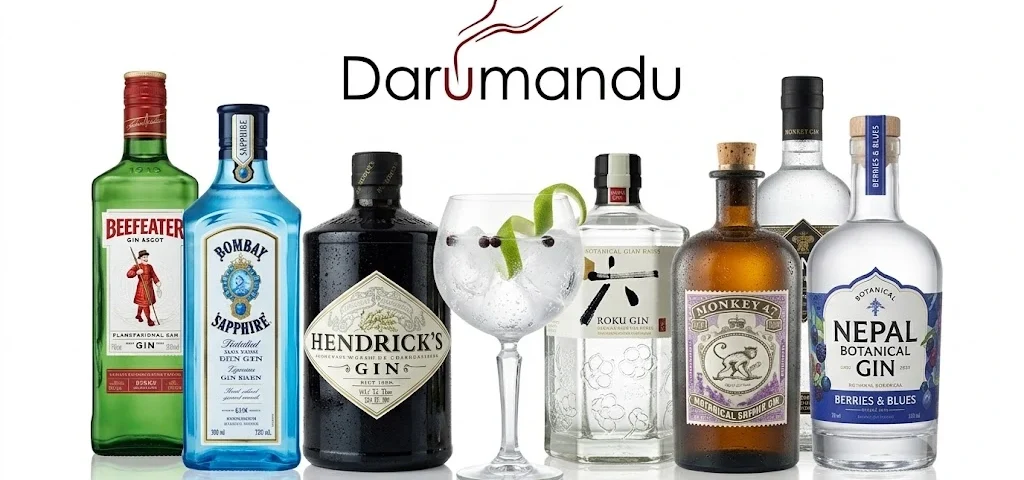
Gin is a versatile botanical spirit legally defined by its dominant juniper base, currently experiencing rapid growth in Nepal’s urban market as consumers shift toward premium spirits and craft mixology; a trend mirroring a global market projected to reach $36.5 billion by 2036.
The market is primarily divided into distinct styles: traditional London Dry Gin, characterized by its crisp, unflavored 40% ABV profile exemplified by Beefeater London Dry and its signature Seville orange peel, and Contemporary/Flavoured Gin, which highlights local fruit and floral elements as seen in Nepal’s domestic craft pioneer, Berries & Blues, crafted from Himalayan botanicals at an approachable 34.2% ABV.
Other historical categories include Old Tom, Plymouth, and Sloe Gin. Driven by an expanding middle class and the rise of home-cocktail culture, premier international benchmarks and local craft innovations are now directly accessible at stores and in the online delivery sites as well .
What Is Gin? The Complete Beginner’s Guide
Gin is a spirit made from neutral grain alcohol flavored with botanicals, such as plants, fruits, roots and spices. Juniper must be the main flavor, which gives gin its fresh, pine-like taste.
It starts with grain like wheat, barley or corn, distilled to a very pure spirit. That spirit is then redistilled with botanicals such as coriander, citrus peel, angelica root and cardamom.
Gin began as genever, a juniper-flavored medicinal spirit from the 1600s Netherlands. It reached Britain and evolved into London Dry, now the most popular style worldwide.
Most gin is dry, herbal and crisp rather than sweet, which makes it great in cocktails. In the UK and EU, it must be at least 37.5% alcohol by volume.
The Types of Gin You Will Encounter in Nepal
Understanding gin styles is the difference between buying the right bottle and buying the wrong one for how you want to drink it.
- London Dry Gin is the classic. No artificial flavorings after distillation; all the botanicals must be present during the distillation process. Juniper-forward, dry, and clean. Beefeater is the defining example. Works in every classic gin cocktail; Martini, Gin and Tonic, Negroni, Gimlet.
- Flavoured / Contemporary Gin is the fastest-growing category globally. The distiller adds fruit, berries, herbs, or spices — sometimes in distillation, sometimes after, to create a specific flavour profile beyond traditional juniper. Berries & Blues is Nepal’s own answer to this style. More approachable, more immediately interesting, better suited to sipping over ice or in simple cocktails.
- Old Tom Gin is slightly sweeter than London Dry, a style that bridges the gap between the drier London style and the original Dutch genever. Less common in Nepal but worth knowing.
- Plymouth Gin comes exclusively from Plymouth, England. Softer and earthier than London Dry, with more root botanical character. A geographically protected style.
- Sloe Gin is not technically a gin, it is a liqueur made by infusing gin with sloe berries and sugar. Lower ABV, sweeter, and usually drunk as a digestif or in a Sloe Gin Fizz.
| Style | Character | ABV Typical | Best Serve |
| London Dry | Juniper-forward, dry, botanical | 40–47% | Gin & Tonic, Martini, Negroni |
| Flavoured / Contemporary | Fruit, floral, or spice led | 34–40% | Over ice, simple cocktails |
| Old Tom | Slightly sweet, softer | 40–42% | Tom Collins, classic cocktails |
| Plymouth | Earthy, softer, rounder | 41.2% | Gin & Tonic, Gimlet |
| Sloe Gin | Sweet, berry, liqueur style | 25–30% | Sloe Gin Fizz, over ice |
Why People are Preferring Gin in Nepal Right Now?
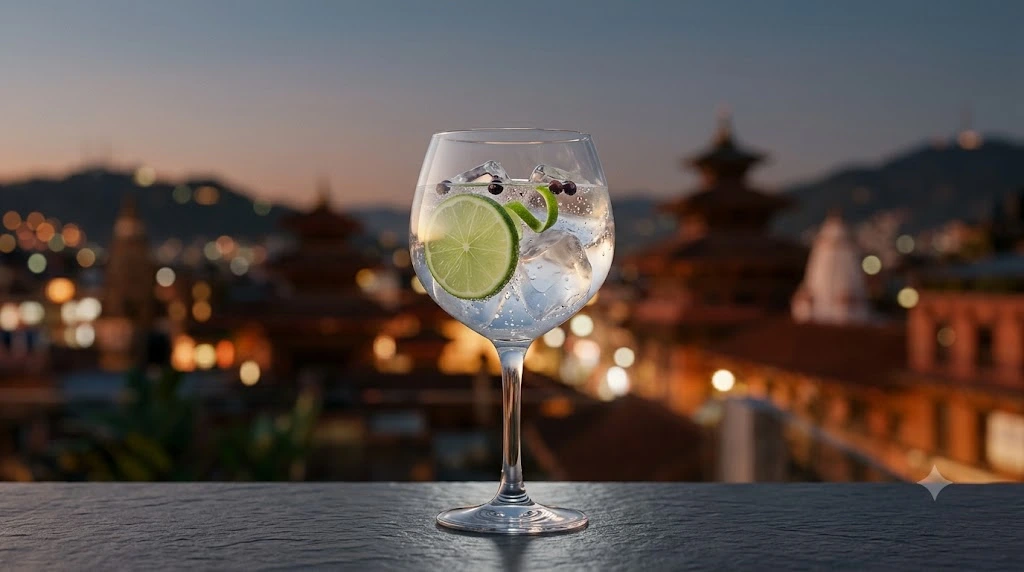
There is a particular kind of evening in Kathmandu that belongs to gin.
A rooftop in Jhamsikhel. The city spread below in its improbable tangle of temples, traffic, and tile roofs. A glass arrives; ice, gin, tonic, a twist of lime, and the botanical complexity of the drink does something remarkable. It slows everything down. The evening becomes deliberate. The conversation gets interesting.
Gin is not new to Nepal. The consumption of gin has been increasing in Nepal steadily as the country’s urban professional class discovers what bartenders in London, Tokyo, and Thamel’s cocktail bars have known for years: gin is the most versatile, most nuanced, and most rewarding spirit to explore.
Customer preferences in Nepal have shifted towards a greater demand for alcoholic beverages. With an increasing young population and a growing middle class, there is greater disposable income available for leisure activities. Trends in the market indicate a growing demand for premium and craft alcoholic beverages in Nepal.
Gin sits at the exact intersection of these trends. Premium enough to satisfy the discerning drinker. Complex enough to reward curiosity. Versatile enough to work in everything from a classic gin and tonic to an elaborate cocktail that a Thamel bar charges NPR 800 for. And now, increasingly, available for home delivery across Valley .
Products Based on Types of Gins Available
1. London Dry Gin
- Style Profile: The undisputed classic standard. Strict rules dictate that all botanicals must be present during the distillation process, with no artificial flavors or sweeteners added afterward. Juniper-forward, dry, crisp, and clean.
- Global Benchmarks: Tanqueray, Gordon’s, Bombay Sapphire.
- Available:
- Beefeater London Dry Gin (1L) — NPR 5,380
- The defining standard: Steeped with 9 natural botanicals for 24 hours in London. Juniper-forward with a crisp Seville orange and lemon peel citrus lift.
- Beefeater London Dry Gin (1L) — NPR 5,380
2. Flavoured / Contemporary Gin
- Style Profile: The fastest-growing global category. Distillers introduce fruits, berries, florals, or regional herbs—either during or post-distillation—to build a distinct profile beyond heavy traditional juniper. Highly approachable and ideal for casual sipping or simple mixes.
- Global Benchmarks: Hendrick’s (infused with cucumber & Bulgarian rose), Malfy, Roku.
- Available:
- Berries & Blues Himalayan Botanical Gin (750ml) — NPR 1,386
- Nepal’s local craft answer: Crafted using native Himalayan flora. Bottled at an approachable 34.2% ABV to emphasize berry sweetness and soft floral notes over harsh alcohol burn.
- Berries & Blues Himalayan Botanical Gin (750ml) — NPR 1,386
3. Old Tom Gin
- Style Profile: Slightly sweeter and softer than London Dry, bridging the gap between crisp modern gin and historic Dutch Genever. A critical ingredient for classic 19th-century cocktails.
- Global Benchmarks: Hayman’s Old Tom Gin, Ransom Old Tom, Ableforth’s Bathtub Gin.
4. Plymouth Gin
- Style Profile: A geographically protected style produced exclusively in Plymouth, England. Slightly sweeter, softer, and earthier than London Dry, with a higher concentration of root botanicals (like orris and angelica root).
- Global Benchmark: Plymouth Gin Original Strength (41.2% ABV)
5. Sloe Gin
- Style Profile: Technically a gin-based liqueur made by infusing gin with wild sloe berries (blackthorn fruit) and sugar. It features a lower ABV (25–30%), a deep red color, and a sweet, tart berry profile traditionally served as a digestif or in a Sloe Gin Fizz.
- Global Benchmarks: Plymouth Sloe Gin, Sipsmith Sloe Gin, Gordon’s Sloe Gin.
Gin and Its Botanicals – What Makes Each Gin Taste Different
This is the question that separates curious gin drinkers from casual ones, and answering it makes every future gin purchase more rewarding.
Every gin distiller starts from the same neutral grain spirit at high purity. What they add to that spirit; the botanical recipe, determines entirely what the finished gin tastes like. The distiller is essentially a flavour architect, choosing which botanicals to use, in what quantities, and at which stage of production.
Juniper is non-negotiable. By legal definition in most markets, a spirit cannot call itself gin without juniper being the dominant botanical flavour. But beyond juniper, the possibilities are almost limitless.
Up to 200 samples of juniper are tested at Beefeater each year, ensuring that the same quantity and style of juniper is continuously used for the brand, bottle after bottle. This is the level of attention that separates a great gin from a generic one — quality control not just of the production process but of the raw ingredients that define the flavour.
The key botanical categories and what they contribute:
- Citrus botanicals (lemon peel, orange peel, grapefruit) — brightness, freshness, the lift that makes gin refreshing. Beefeater’s Seville orange peel is its most distinctive citrus note.
- Root botanicals (angelica root, orris root, licorice root) — structure, earthiness, texture, and the dry finish that makes London Dry gins distinctly “dry.”
- Seed botanicals (coriander seed, cardamom seed) — spice, warmth, complexity. Coriander is present in almost every gin recipe.
- Floral botanicals (rose petal, lavender, elderflower) — delicacy, fragrance, the softer contemporary gin character. Hendrick’s rose and cucumber is the most famous example.
- Fruit botanicals (cucumber, berries, sloe) — freshness, modern accessibility, the flavoured gin category that Berries & Blues represents for Nepal.
5 Easy Gin Cocktails to Make at Home
These five recipes need only a few ingredients and simple tools. They range from a classic highball to a fruity Himalayan twist.
1. Gin and Tonic:
Fill a tall glass with ice, add 2 oz Beefeater London Dry, then slowly top with 4 oz tonic. Squeeze in a lime wedge, add a cucumber slice and don’t stir.
2. Dry Martini:
Stir 2.5 oz Beefeater London Dry and 0.5 oz dry vermouth with ice for 30 seconds. Strain into a chilled glass and finish with a lemon twist.
3. Berries & Blues Spritz:
Pour 2 oz Berries & Blues, 1 oz elderflower cordial and 3 oz sparkling water over ice in a wine glass. Add a handful of berries for a light, fruity drink.
4. Gin Sour:
Shake 2 oz Beefeater, ¾ oz lime juice, ¾ oz simple syrup and 1 egg white without ice, then again with ice. Double strain for a smooth, foamy drink.
5. Berries & Blues Negroni:
Stir 1.5 oz Berries & Blues, 1 oz Campari and 1 oz sweet vermouth with ice. Strain over a large cube and add an orange peel for a fruitier Negroni.
Real Questions People Ask About Gin in Nepal
What is the best gin in Nepal for beginners?
Berries & Blues is the best starting point — lower ABV at 34.2%, a fruity and approachable flavour profile, made in Nepal, and priced accessibly. Once comfortable with gin’s botanical character, move to Beefeater London Dry for the full classic London Dry experience.
What is the price of Beefeater gin in Nepal?
Beefeater London Dry Gin Available for delivery across Kathmandu, Lalitpur, and Bhaktapur.
What is the difference between London Dry Gin and flavoured gin?
Despite the use of botanicals and other sweet ingredients like licorice in its preparation, London Dry gin is often not a sweet liquor. London Dry must derive all its flavour from botanicals added during distillation — nothing added after. Flavoured gin allows post-distillation additions of fruit, colour, or flavouring. London Dry is drier and more complex. Flavoured gin is more approachable and fruit-forward.
What is Berries & Blues gin?
Berries & Blues is a Himalayan Botanical Gin crafted to show off the incomprehensible richness of Nepalese botanicals, produced in Nepal at 34.2% ABV. It is Nepal’s domestic entry into the flavoured botanical gin category — made with locally sourced botanicals and priced to be accessible to Nepal’s growing gin audience.
Is gin stronger than vodka?
Most gins and vodkas available in Nepal are bottled at 40% ABV — the same strength. However, Berries & Blues is an exception at 34.2%, making it lighter than standard spirits. The perceived difference in strength comes from flavour — gin’s botanical complexity makes it seem more intense than vodka’s neutral profile, even at the same alcohol percentage.
What is the cheapest gin in Nepal?
The cheapest gin in Nepal starts at NPR 349 for Blue Riband Gin in smaller sizes. For 750ml bottles, Blue Riband and Snowman Gin represent the budget domestic options at NPR 1,500–1,900. Berries & Blues at NPR 1,386 is the most affordable botanical craft gin available for delivery.
What mixer goes best with gin?
It is a good idea to have gin with mixers that will complement its juniper flavours, such as tonic water, citrus juices, and vermouth. Tonic water remains the classic pairing. Ginger beer works beautifully with most London Dry gins. Cucumber water, elderflower tonic, and berry sodas complement flavoured gins like Berries & Blues particularly well.
Can I order gin online in Nepal with late-night delivery?
Yes. One can order gin online in Nepal through different online trusted delivery sites accross Valley and in other parts of valley as well.
The Global Gin Boom – And Why It Matters for Nepal
The global gin market is projected to grow from USD 25.3 billion in 2026 to USD 36.5 billion by 2036, a 3.8% yearly rate. London Dry Gin leads with about a 35% share.
Cocktail experimentation in urban bars and home mixology is driving this demand. Premiumisation, selling higher-priced versions of a product, is pushing buyers toward craft, small-batch and botanical-forward gins.
Nepal is following this trend, with growing demand for premium and craft drinks. Consumers are becoming more selective and want unique, high-quality products.
Beefeater represents the established international standard, while Berries & Blues is a local botanical gin made with Himalayan botanicals. Both are growing side by side in Nepal’s gin market.
Market figures are industry estimates and vary between reports, so treat them as approximate.
Get your favourite Gin Now!
The gap between wanting gin and having gin in Nepal has never been smaller.
Both Beefeater London Dry Gin and Berries & Blues Himalayan Botanical Gin are available for order online, with same-day delivery across Kathmandu, Lalitpur, and Bhaktapur, and late-night midnight delivery for those evenings when the craving arrives after the shops have closed.
No hunting through different stores for a specific bottle. No price uncertainty. No wondering whether the seal has been tampered with.
Order online. Receive at your door. Make a gin and tonic that is better and makes you happy!
Drink responsibly. Drink legally.
Updated on: 10/7/2026
Written by: Anisha Bhandari